
overveiw
Morocco is a great place to shop. There are so many shops full of wonderful gifts and souvenirs. In today’s blog, we going to show you the best things to buy in Morocco. I’ve haggled in several markets in Morocco, so I’ll give you some tips on how to haggle and how to make sure it’s a good quality product.
1: what are the Best things to buy in Morocco:
Many people ask us , “What are the best things to buy in Morocco? As a rule of thumb, you can buy carpets, jewellery, henna, spices, and more.
Carpets:
Morocco is a great place to buy carpets. Traditional Moroccan rugs are hand-woven by the Berber community and have been made by families for many years. They come in many different colours, but terracotta, red and sand colours are very popular. You will have to negotiate hard to get a fair price and don’t go into a carpet shop if you don’t intend to buy a carpet – it can be a long process! Rugs are heavy, sometimes too heavy to be shipped by air, so getting them home is often a problem. Be sure you use a trusted shipping company. You don’t want to spend hundreds of dollars on a beautiful Moroccan rug and then never see it again.
4 Best Places to Shop in Morocco:
- souks of Marrakech.
- souks of Agadir.
- souks of Casablanca.
- souks of Fes.
Henna:
Morocco is a great place to buy cheap Henna hair dye. It normally comes in block form, is broken up and mixed with water. As a hair dye, henna is semi-permanent, but quite intense. People also buy tubes of Henna to create patterns on their skin. The cost of buying a piece of henna or designing your own henna is no more than 5 euro.
Jewellery:
Jewellery, especially silver jewellery, is popular in Morocco, making it a great shopping destination. Most jewellery features traditional Berber designs, and three main aspects distinguish Moroccan jewellery.
Mdama: the traditional belt used to secure outerwear and taktits (Moroccan national costume). Necklaces, bracelets and jewellery boxes in a similar style are also available. Traditionally, this jewellery was worn as a wedding ‘dowry’.
Khalkhal: The Khalkhal is a traditional anklet with Ottoman and Arabic influences. It is usually made of silver, gold or a combination of both.
Khamsa: The khamsa is the ‘Eye of Fatima’ or ‘Hand of Fatima’. It is a Jewish-Moroccan symbol and represents a hand with the power to ward off evil. It is said to shield the wearer from bad energy.you can bought a beautiful silver ring while shopping in Marrakech. Silver bracelets and bangles are also popular. Real silver doesn’t stick, so take a magnet to try it out. There is a large silver souk in Essaouira and you can buy vintage Moroccan jewellery in Tafraoute, Tiznit.
Argan Oil:
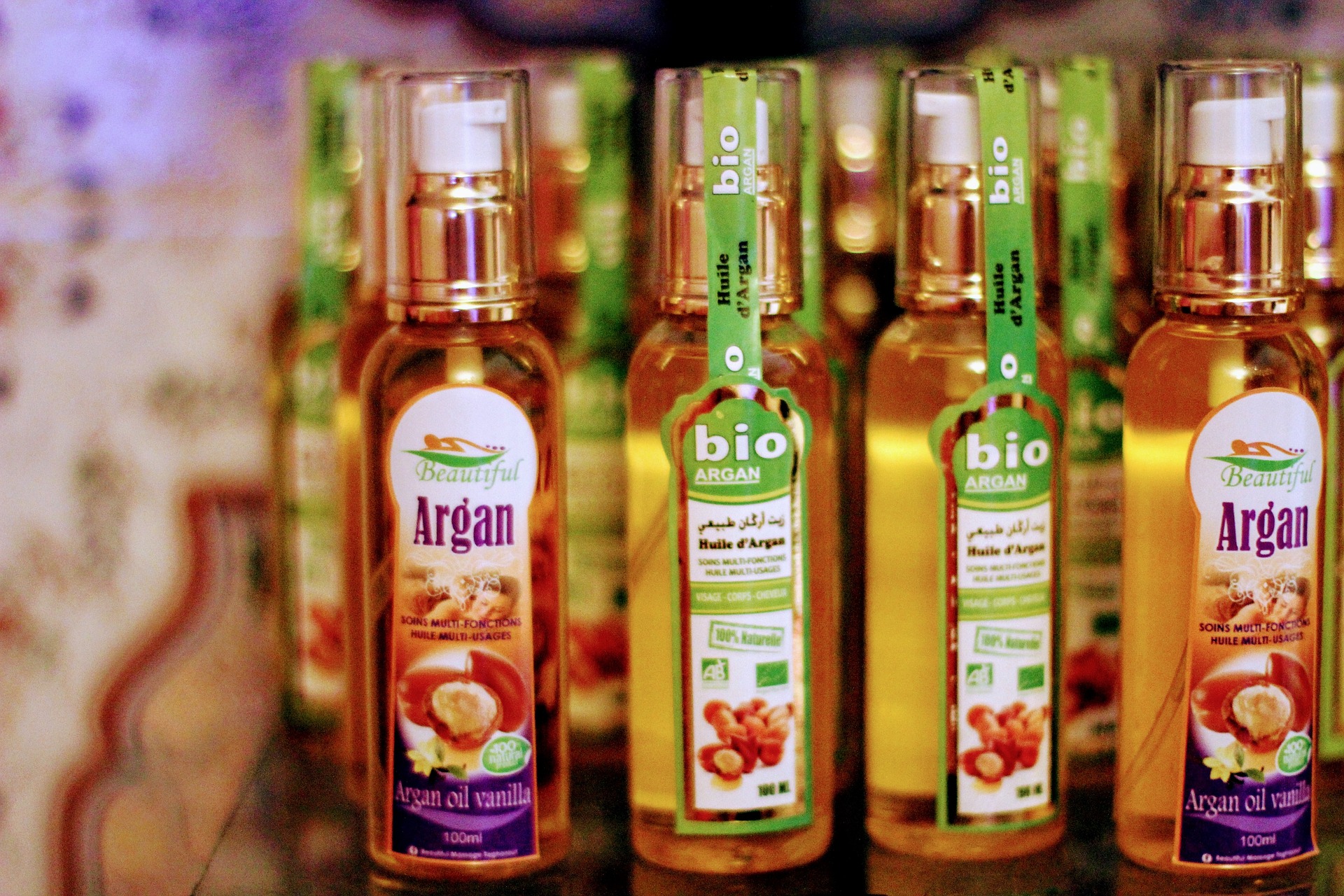
Argan oil products from Morocco. Use real argan oil on your hair to soothe and improve split ends. Also like to buy an argan oil shampoo which is good for the scalp. You can still get a small bottle for $10-$20 and you can even get a 1 litre bottle of high quality argan oil for $40. The right argan oil should have a ‘nutty’ scent that fades quickly and a silky texture, which means it melts easily in your hand.
Mint Tea:
All forms of Moroccan hospitality include the ritual of pouring mint tea. Peppermint tea is brewed in front of guests and poured from an elevated position to welcome them. Many guests like to take home a mint tea set, which includes a teapot, cup, metal saucer, and mint tea samples.
Moroccan Slippers:
Traditional Moroccan slippers are made from cow or camel skin, have no heel and are open at the back. They are called ‘chervil’ and are very comfortable. Moroccan slippers are often decorated with beautiful embroidery and sequins, making them a very unique and special gift.
Tagine Pots: Tagine pots are the perfect pottery to take home. Why not learn how to make a tagine dish and try to recreate it at home? Small, basic tagine pots can be found for around 50-100 dirhams, The disadvantage of buying a tagine pot is that they are quite heavy and difficult to carry. It is recommended to have them wrapped tightly and take them as hand.